
What You Need to Know
What Safe Sleep Means
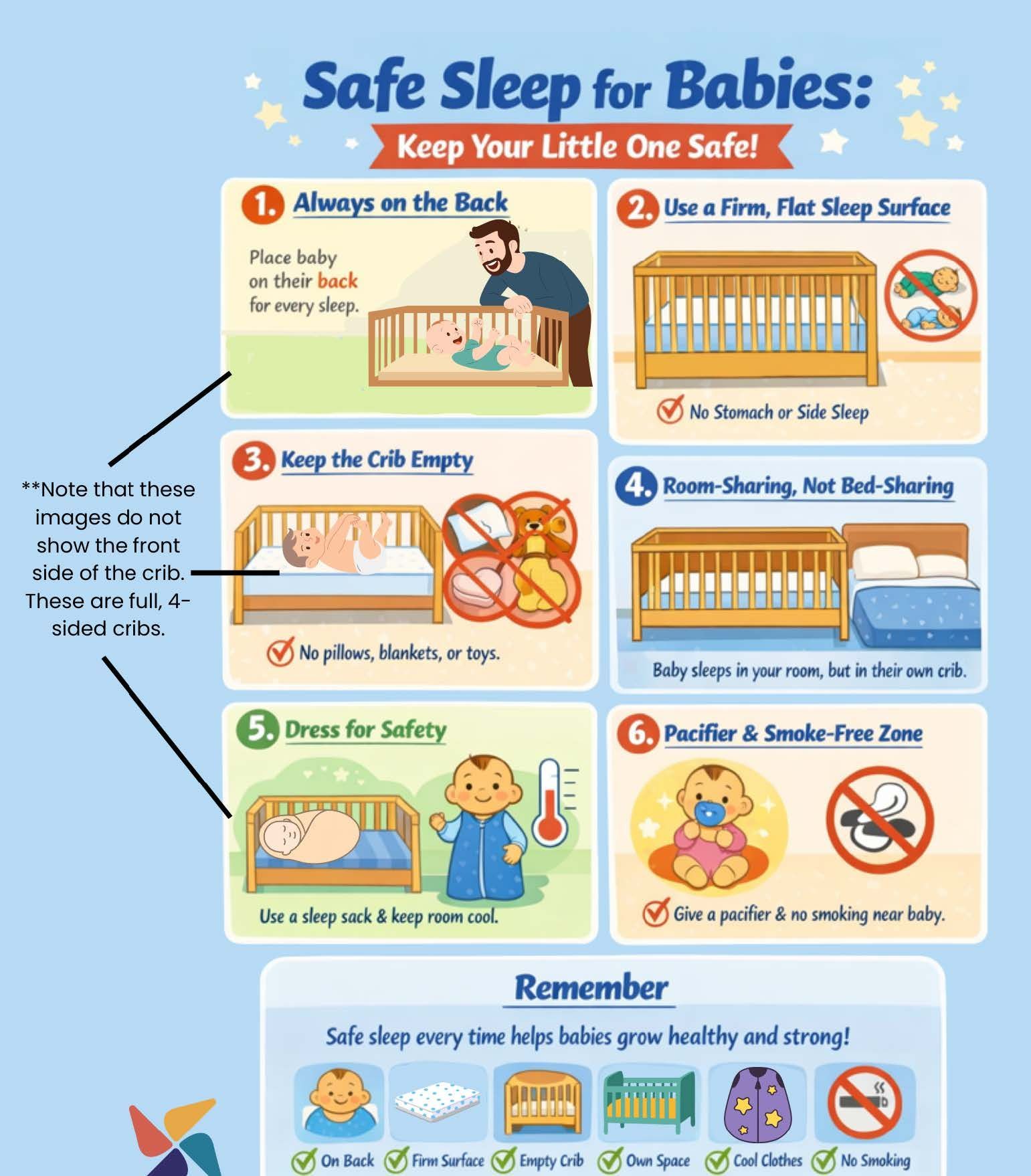
Safe sleep means placing babies to sleep in ways that keep them healthy and protected. Babies should always sleep:
- On their back – never on their stomach or side.
- On a firm, flat surface – like a crib, bassinet, or portable play yard.
- Without soft items – such as pillows, blankets, stuffed animals, or bumper pads.
These steps help prevent suffocation, strangulation, or accidental smothering (AAP, 2022).
Where Babies Should Sleep
- Babies should sleep in the same room as their parents but not in the same bed for at least the first 6 months.
- Use a separate, safe sleep surface for each sleep time.
Sharing a room makes it easier for parents to feed and watch their baby, but bed-sharing can be dangerous (Centers for Disease
Control and Prevention [CDC], 2023).
Other Safe Sleep Tips
- Use a sleep sack or wearable blanket instead of loose blankets.
- Keep the crib empty – only a fitted sheet is needed.
- Offer a pacifier at sleep time; it may reduce the risk of SIDS.
- Avoid overheating – dress the baby in light clothing and keep the room cool.
- Do not smoke or allow smoking around the baby.
Why Safe Sleep Matters
Babies’ bodies and brains are still developing. Safe sleep reduces the chance of accidents and gives babies the best start in life. Families and caregivers can make sleep time safe by following these guidelines every time the baby sleeps (AAP, 2022; CDC, 2023).
Connect with our Valued Partner: MDHHS
Visit the Michigan Safe Sleep website because it gives important information on how to keep babies safe while they sleep. The site explains simple steps that can help prevent sleep-related infant deaths, like placing babies on their backs to sleep, using a safe crib with no pillows or toys, and keeping the sleep area smoke-free. It also offers helpful resources for parents, caregivers, and professionals, including videos, local support, and answers to common questions about safe sleep. Learning and sharing this information can help protect babies and give families peace of mind.
Safe Sleep for Babies: Keep Your Little Ones Safe
Always on the Back
- Place your baby on their back for every sleep – naps and nighttime.
- Sleeping on the stomach or side increases risk of SIDS (Sudden Infant Death Syndrome).
Using a Firm,
Flat Sleep Surface
- Crib, bassinet, or play yard is best.
- Mattress should be firm; no soft surfaces like couches, armchairs, or adult beds.